Space Book
Sharing the excitement of space exploration
🚀 Welcome to Space Book: Your Command Center for the Cosmos!
space exploration

For centuries, humanity has looked up and wondered. Today, we don't just wonder—we launch! From the race to the Moon to the next giant leap to Mars, the current era of space exploration is the most dynamic and exciting in history.

That's why we created Space Book: A single destination for sharing and celebrating all the excitement of space exploration.

🛰️ What is Space Book?

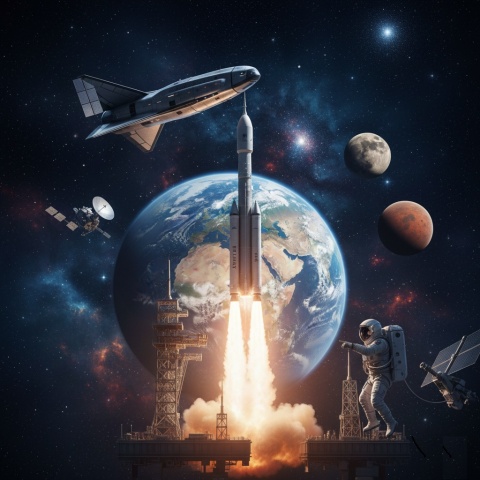
Space Book is your all-in-one resource, community, and hub for everything orbiting Earth and beyond. Our goal is simple: to make the vastness of space accessible, understandable, and incredibly thrilling for everyone, from the casual observer to the dedicated space enthusiast.

What You'll Find Here:

  • 📰 Space News You Can Use: Get the latest updates on rocket launches, mission milestones, and the cutting-edge developments from agencies like NASA, ESA, JAXA, and the commercial giants pushing the envelope.
  • 🔭 Deep Dives & Analysis: We go beyond the headlines. Explore detailed articles on spaceships (like Starship and Orion), space probes (like James Webb and Voyager), rockets, and the complex engineering that makes it all possible.
  • 📜 History of Exploration: Revisit the iconic moments—from Sputnik and Apollo to the Space Shuttle program. Understand the foundation upon which our future in space is being built.
  • 🧍‍♂️ The Human Element: Follow the journeys of astronauts and cosmonauts, learn about life aboard the International Space Station, and look ahead to human space exploration to the Moon and Mars.
  • 🔮 Future Developments: What's next? We'll track the most ambitious future plans, including space tourism, orbital manufacturing, and the search for life in the cosmos.

🤝 Join the Crew!

Space Book is more than a news site—it's a community. We believe the thrill of discovery is best shared.

  • Discuss: Share your thoughts and passion with like-minded explorers.
  • Learn: Pose questions and deepen your knowledge of the universe.
  • Inspire: See the latest images and video that capture the beauty of the cosmos.

The journey to the stars is already underway, and we invite you to take a seat with us. Let the adventure begin!


Are you ready to explore? Dive into our first major feature: The Complete Guide to the Artemis Program!
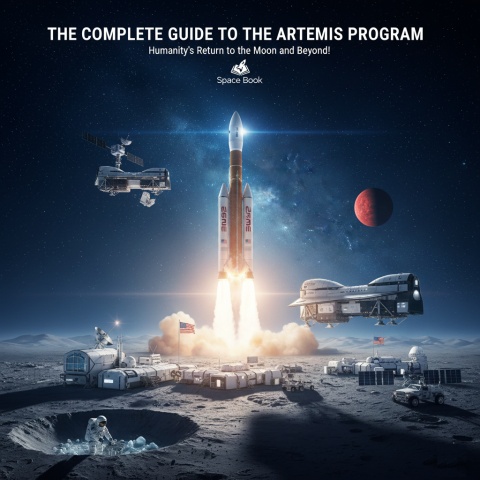
🚀 The Complete Guide to the Artemis Program: Humanity's Return to the Moon and Beyond!
Artemis Program

For over 50 years, the Moon has beckoned, a silent testament to humanity's greatest exploratory achievement. Now, after decades of planning and technological leaps, we are on the cusp of a new lunar era: The Artemis Program.

Artemis isn't just about revisiting old landing sites; it's about establishing a sustainable presence on and around the Moon, paving the way for the ultimate human journey to Mars. Get ready to dive into the most ambitious space exploration program of our generation!

What is the Artemis Program?

At its core, Artemis is NASA's human spaceflight program with international and commercial partners, designed to return humans to the Moon, land the first woman and first person of color on the lunar surface, and establish a long-term presence there. It aims to leverage the Moon as a proving ground for technologies and procedures necessary for future missions to Mars.

The name "Artemis" itself is significant. In Greek mythology, Artemis is the twin sister of Apollo and goddess of the Moon, hunting, and the wilderness—a powerful symbol for this new chapter of lunar exploration.

The Pillars of Artemis: Key Components & Technologies

Artemis is a complex undertaking, relying on several critical pieces of hardware and infrastructure.

1. The Space Launch System (SLS)

This is NASA's super heavy-lift rocket, the most powerful rocket ever built. SLS is designed to launch the Orion spacecraft and heavy cargo beyond Earth orbit.

  • Key Features: Immense thrust, derived from Space Shuttle technologies (boosters and main engines), and designed for deep-space missions.
  • Role in Artemis: Launches Orion with crew and critical hardware for lunar missions.

2. The Orion Spacecraft

Orion is NASA's new crew capsule, built to carry astronauts farther than they've ever traveled before. It's designed for long-duration deep-space missions and safe re-entry.

  • Key Features: Advanced life support, robust heat shield, capable of supporting crews for weeks, equipped with a European Service Module (ESM) for propulsion and power.
  • Role in Artemis: Carries the astronauts to lunar orbit and back to Earth.

3. The Human Landing System (HLS)

This is the vehicle that will transport astronauts from lunar orbit to the Moon's surface and back to Orion. Several companies are developing HLS designs.

  • Current Primary Provider: SpaceX's Starship HLS variant is currently slated for the first crewed landing.
  • Role in Artemis: The "last mile" delivery system for astronauts to the lunar surface.

4. The Gateway

A small space station in lunar orbit, the Gateway will serve as a multi-purpose outpost. It will provide a staging point for lunar surface missions, a science laboratory, and a potential refueling station.

  • Key Features: Modular design, capable of hosting crew for extended periods, advanced communications, and robotic interfaces.
  • Role in Artemis: Provides critical support for lunar missions, allowing for longer stays on the Moon and acting as a stepping stone for future deep-space exploration.

5. Lunar Surface Systems

This includes habitats, rovers, and other equipment necessary for sustained human presence on the Moon. Developing these systems is crucial for establishing a lunar base.

  • Key Features: ISRU (In-Situ Resource Utilization) technologies for using lunar resources like water ice, advanced power systems, and mobility platforms.
  • Role in Artemis: Enables long-duration scientific research and infrastructure development on the lunar surface.

The Artemis Missions: A Step-by-Step Return

The Artemis program is structured as a series of increasingly complex missions.

Artemis I: The Uncrewed Test Flight (Completed!)

  • Objective: To test the SLS rocket and the Orion spacecraft in a lunar flyby mission, without a crew.
  • Status: Successfully completed in late 2022. Orion traveled further than any human-rated spacecraft before, safely returning to Earth. This mission proved the readiness of the core hardware.
  • Significance: A monumental success that validated critical systems for future crewed missions.

Artemis II: The Crewed Lunar Flyby

  • Objective: To send a crew of four astronauts on a lunar flyby, replicating the Artemis I trajectory, but with humans aboard. This will be the first crewed mission to the Moon since Apollo 17 in 1972.
  • Expected Timeline: Currently targeted for April 2026.
  • Significance: The first time humans will venture beyond low Earth orbit in over half a century, testing Orion's life support systems and crew operations in deep space.

Artemis III: Humanity Returns to the Lunar Surface

  • Objective: To land astronauts—including the first woman and first person of color—on the Moon's South Pole. The crew will spend approximately a week exploring and conducting scientific research.
  • Expected Timeline: Currently targeted for 2027 or 2028.
  • Significance: The historic return of humans to the lunar surface, marking a new chapter in lunar exploration focused on scientific discovery and establishing a long-term presence.

Future Artemis Missions (IV and Beyond)

Following Artemis III, subsequent missions will continue to build out the Gateway, establish a lunar base at the South Pole, conduct more extensive scientific research, and test technologies for Mars. These missions will focus on sustainability and longer-duration stays.

Why the Moon's South Pole?

The South Pole of the Moon is of particular interest due to the potential presence of water ice in permanently shadowed craters. Water ice is a precious resource that can be used for:

  • Drinking water for astronauts.
  • Breathing oxygen.
  • Rocket fuel (hydrogen and oxygen).

This makes the South Pole a strategic location for establishing a sustainable lunar outpost, reducing the need to transport all resources from Earth.

Beyond the Moon: The Road to Mars

The Artemis Program is not an end in itself; it is a critical stepping stone to sending humans to Mars. The Moon will serve as:

  • A Testbed: For long-duration human missions, radiation protection, closed-loop life support systems, and deep-space communication.
  • A Training Ground: For astronauts to practice complex operations in an extraterrestrial environment.
  • A Development Hub: For advanced propulsion systems and In-Situ Resource Utilization (ISRU) technologies crucial for Mars missions.

Join the Journey!

The Artemis Program represents humanity's next great leap into the cosmos. It's a testament to our ingenuity, collaboration, and insatiable desire to explore. At Space Book, we'll be tracking every launch, every mission milestone, and every new discovery as we embark on this incredible journey back to the Moon and onward to Mars.

What excites you most about Artemis? Share your thoughts in the comments below!

🚀 The Falcon 9: The Reusable Rocket That Revolutionized Spaceflight
Falcon 9

For decades, rockets were largely disposable. Each magnificent launch ended with expensive hardware falling back to Earth, lost forever. Then came the Falcon 9, a rocket that didn't just reach orbit; it returned. With its revolutionary reusable booster, the Falcon 9 didn't just put satellites into space—it single-handedly blazed a trail for a future where reusability is the norm.

Today, the Falcon 9 is undeniably the dominant workhorse of the space launch industry, but its legacy will be far greater: proving that routine, rapid, and affordable reusability is not just possible, but essential.

A New Era of Rocketry: Reusability is Key

Before Falcon 9, the idea of landing a 15-story rocket booster vertically back on a landing pad or an autonomous drone ship seemed like science fiction. SpaceX, under the vision of Elon Musk, made it a reality.

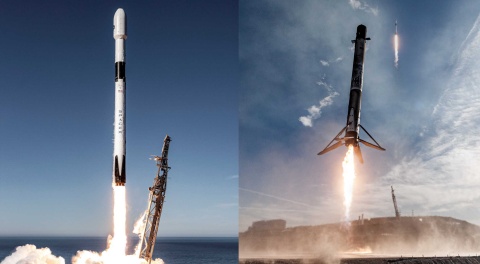
The core innovation of the Falcon 9 lies in its first-stage booster. Unlike traditional rockets, which shed their spent stages into the ocean, the Falcon 9's booster performs a series of complex maneuvers after separating from the second stage:

  • Boostback Burn: Re-orients the booster for return.
  • Entry Burn: Slows it down for atmospheric re-entry.
  • Landing Burn: Precisely guides it to a soft touchdown using its nine Merlin engines and deployable landing legs.

This remarkable ballet of thrust and aerodynamics allows the booster to be refurbished and flown again, dramatically cutting costs and increasing launch cadence.

The Unrivaled Workhorse of Today's Space Industry

The success of Falcon 9's reusability quickly translated into market dominance. Here's why it holds such a pivotal role:

  1. Cost-Effectiveness: Reusing the most expensive part of the rocket slashes launch costs. This has made space more accessible for governments, commercial companies, and even universities.
  2. Rapid Cadence: With boosters returning and being quickly prepared for their next flight, SpaceX can achieve an unprecedented launch frequency. This rapid turnaround is vital for deploying large constellations of satellites, like SpaceX's own Starlink.
  3. Reliability: With hundreds of successful launches and landings, the Falcon 9 has proven itself to be incredibly reliable, instilling confidence across the industry.
  4. Versatility: The Falcon 9 can carry a wide variety of payloads to different orbits, from low-Earth orbit (LEO) to geosynchronous transfer orbit (GTO) and even interplanetary trajectories. It also launches the Dragon spacecraft, carrying cargo and astronauts to the International Space Station.

Its impact is visible in the sheer number of launches. On any given week, there's a good chance a Falcon 9 is sending something to space, whether it's an internet satellite, a scientific probe, or supplies for astronauts.

Blazing a Trail for Tomorrow: The Reusable Future

The Falcon 9 isn't just a success story; it's a blueprint. Its proven track record of reusability has fundamentally shifted the paradigm for rocket design and space operations.

  • Industry-Wide Shift: Competitors, both established aerospace giants and new startups, are now aggressively pursuing their own reusable rocket designs. Companies like Blue Origin with New Glenn and even state-backed programs are incorporating reusability as a core tenet of their next-generation launch vehicles.
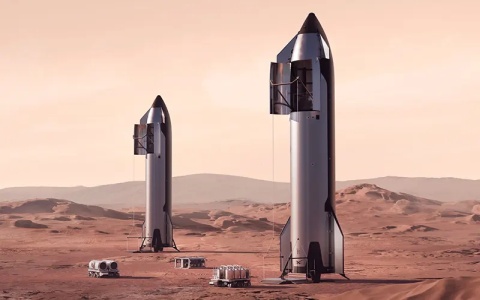
  • Starship: The Next Evolution: SpaceX itself is pushing the boundaries further with Starship, an audacious vision for a fully reusable, two-stage-to-orbit system designed to carry massive payloads and hundreds of people to the Moon and Mars. Starship's development directly benefits from the lessons learned with Falcon 9.
  • Sustainable Space Exploration: Reusability is key to making space exploration truly sustainable. It reduces waste, lowers the environmental footprint of launches, and makes complex, large-scale endeavors (like lunar bases or Mars colonies) economically viable.

The Falcon 9's elegant return to Earth, deploying its landing legs and settling gently onto a pad, is more than just a feat of engineering; it's a visual metaphor for a new era. It's the moment when the future of spaceflight truly began to take shape.

Join us at Space Book as we continue to track the incredible impact of the Falcon 9 and the exciting reusable rockets that will follow in its wake!

🌌 The Unstoppable Pioneers: Voyager's Grand Tour and Beyond
Voyager

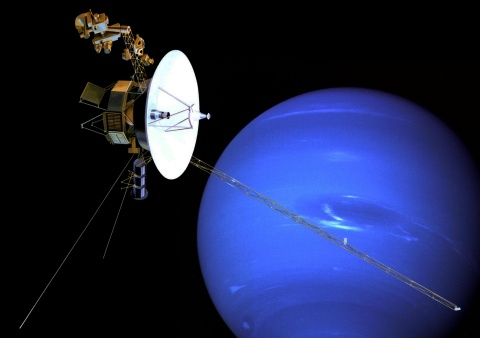
They were launched in the late 1970s, designed for a five-year mission to tour a few planets. Today, more than four decades later, the twin Voyager 1 and Voyager 2 spacecraft are still traveling, still communicating, and still making history. They completed the Grand Tour of the outer Solar System and have become the first human-made objects to enter interstellar space.

The Voyager missions are the ultimate testament to human engineering and our insatiable drive to explore the infinite.

The Grand Tour: A Planetary Alignment for the Ages

The entire Voyager mission was made possible by a rare planetary alignment that occurs only once every 175 years. This alignment allowed the spacecraft to use a technique called gravity assist (or planetary slingshot) to hop from one giant planet to the next, saving fuel and cutting travel time by decades.

The original plan focused on Voyager 1 visiting Jupiter and Saturn, and Voyager 2 visiting Jupiter, Saturn, Uranus, and Neptune.

Jupiter and Saturn (1979 - 1981)

  • Voyager 1 & 2 flew past Jupiter, discovering volcanic activity on the moon Io and fine structure in the planet's faint rings.
  • At Saturn, the probes revealed the intricate complexity of its rings and confirmed the existence of complex atmospheres on the moons Titan and Enceladus. Voyager 1 was deliberately sent on a trajectory close to Titan to study its atmosphere, putting it on a path to fly out of the plane of the Solar System forever.

Uranus and Neptune (Voyager 2 Only)

Voyager 2 was the only spacecraft to complete the final legs of the Grand Tour:

  • Uranus (1986): Voyager 2 was the first and only spacecraft to visit the ice giant. It discovered 10 new moons and found that the planet's powerful magnetic field was tilted at an incredible 60 degrees.
  • Neptune (1989): The final planetary encounter revealed a Great Dark Spot (similar to Jupiter's Great Red Spot) and surprisingly high-speed winds. It also discovered the active geysers on the moon Triton, which spew nitrogen ice.

The Journey to Interstellar Space

After completing the planetary encounters, the missions were officially renamed the Voyager Interstellar Mission (VIM). They left the influence of the Sun's gravity behind and began the slow, challenging trek into the space between the stars.

The Heliosphere and the Termination Shock

The probes had to pass through the heliosphere, the giant magnetic bubble of plasma created by the Sun.

  • The Termination Shock: The point where the solar wind dramatically slows down as it encounters interstellar gas. Both Voyagers crossed this boundary in the mid-2000s.
  • The Heliopause: The final, outermost boundary of the Sun's influence, where the solar wind is stopped completely by the pressure of interstellar gas.
    • Voyager 1 crossed the heliopause and officially entered interstellar space in August 2012.
    • Voyager 2 followed suit, crossing the heliopause in November 2018.

They are now traveling in the relatively undisturbed space between the stars, sending back data about the magnetic fields and cosmic rays outside our solar system—data that is impossible to gather anywhere else.

The Golden Record: Humanity's Time Capsule

Cruising alongside each Voyager probe is the Golden Record, a 12-inch gold-plated copper disk designed as a time capsule for any intelligent alien life that might one day intercept them.

This "message in a bottle" contains:

  • Sounds and music from Earth (including Bach, Chuck Berry, and whale songs).
  • Greetings in 55 human languages and one whale language.
  • 115 images depicting human life, science, and the location of Earth.

It is a beautiful, hopeful gesture, ensuring that even after the spacecraft cease to function, a piece of humanity will continue its journey through the Milky Way.

A Legacy That Keeps Going

The Voyagers operate on tiny amounts of power generated by Radioisotope Thermoelectric Generators (RTGs). While the power output declines every year, NASA engineers continue to strategically shut down non-essential instruments to conserve energy.

  • Expected End of Mission: Sometime around 2025 to 2030, the power levels will become too low to operate the remaining scientific instruments and the transmitter.
  • The Eternal Voyage: Even when silent, both spacecraft will continue their journey, carrying the Golden Records and sailing past dead stars and cold dust clouds, a silent, perpetual monument to our boundless curiosity.

Join us in celebrating these twin mechanical pioneers—the longest-running, farthest-reaching mission in the history of space exploration!

🤯 Rocket Science 101: Why Getting to Orbit is the Hardest Part
Rocket Equation

The sight of a massive rocket blasting off the launchpad is one of humanity’s greatest spectacles. But beneath the fire and smoke lies a deceptively simple principle governed by a single, powerful equation. Leaving Earth isn't just a matter of going "up"; it's a battle against gravity and a mathematical dilemma known as the "tyranny of the rocket equation."

How Rockets Work: The Simple Principle of Thrust

At its core, a rocket operates on Newton's Third Law of Motion: For every action, there is an equal and opposite reaction.

  1. Action: The rocket rapidly expels mass (hot exhaust gases) downward from its combustion chamber.
  2. Reaction: The equal and opposite force pushes the rocket upward. We call this force Thrust.

This is why rockets work best in the vacuum of space: they don't need air to push against. They carry everything they need—fuel (like liquid hydrogen or kerosene) and an oxidizer (like liquid oxygen)—inside their massive tanks.

The Challenge: Why Is Earth So Hard to Leave?

The difficulty of getting into space comes down to two main battles:

1. Gravity (The Up/Down Battle)

To overcome Earth's pull, the rocket's thrust must exceed the gravitational force acting on its massive body. This requires immense power just to lift the rocket off the ground.

2. Orbital Velocity (The Sideways Battle)

This is the part many people miss. Orbit isn't about height; it's about speed. To stay in Low Earth Orbit (LEO), you don't just need to be 200 km high; you need to be traveling sideways at around 7.8 km/s (about 28,000 km/h).

To achieve this incredible horizontal speed, the rocket must perform a gravity turn, gradually tilting from vertical to horizontal. The total change in velocity ( Δ v ) required to reach LEO is enormous, and this is where the physics gets ruthless.

The Tyranny of the Rocket Equation

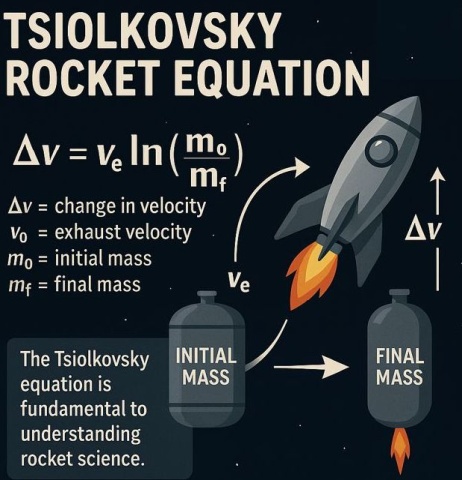
The fundamental relationship between a rocket's performance and its mass is described by the Tsiolkovsky Rocket Equation. Developed in the early 20th century by Russian schoolteacher Konstantin Tsiolkovsky, it is the foundational formula for all of rocketry.

The equation is:

Δ v = v e ln m 0 m f

Let's break down the terms:

  • Δ v (Delta-V): The maximum change in velocity the rocket can achieve. This is the goal (e.g., 7.8 km/s for LEO).
  • v e (Effective Exhaust Velocity): How fast the exhaust leaves the rocket. This depends on the engine design and fuel chemistry. This is the only term an engineer can truly improve through engine design.
  • m 0 (Initial Mass): The total mass of the rocket when it lifts off (structure + payload + propellant).
  • m f (Final Mass): The mass of the rocket after all the propellant is burned (structure + payload).
  • m 0 m f (Mass Ratio): The ratio of initial mass to final mass.

The Limiting Factor: Mass Ratio

The equation is limited by the natural logarithm ( ln ). To achieve a large Δ v (like the 7.8 km/s needed for orbit) you need an astronomical Mass Ratio ( m 0 m f ).

For example, a typical rocket stage might have an exhaust velocity ( v e ) of around 4 km/s . To get 7.8 km/s of Δ v , the required Mass Ratio is:

m 0 m f = e Δ v v e e 7.8 4 6.9

This means that for every 1 kg of final mass (structure and payload), the rocket needs 6.9 kg of propellant!

But the problem is worse: The final mass ( m f ) includes the payload and the rocket structure (engines, tanks, wires, etc.). Because the fuel is so heavy, the tanks must be strong, adding more structural mass, which in turn requires more fuel. This self-defeating cycle is the "tyranny" of the equation.

The Solution: Staging

Since one rocket stage cannot hold enough fuel to get itself and a meaningful payload to orbit, all orbital rockets rely on staging.

  • A First Stage burns its fuel and is then discarded (mass m 0 drops dramatically, increasing Δ v ).
  • A Second Stage starts with a lower m 0 and a fresh supply of fuel to achieve the necessary orbital speed.

This is why, historically, 90% of a rocket's lift-off mass is fuel, and 90% of the hardware is discarded. The payload often represents less than 2% of the vehicle's initial mass.

The Tsiolkovsky equation is the physical reason why the Falcon 9's reusability (recovering the most massive and expensive stage) is such a profound breakthrough—it uses the rocket equation to its limit, but saves the hardware for another fight!

🛰️ The Jewel of Orbit: The Legacy and Future of the International Space Station
ISS

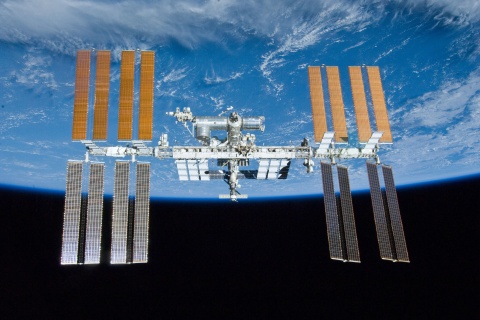
For nearly a quarter of a century, the International Space Station (ISS) has orbited Earth, a permanent beacon of international collaboration, scientific discovery, and engineering prowess. It is the largest structure ever built in space, serving as humanity's unique laboratory far above the constraints of Earth.

However, as its components age, the ISS is preparing for retirement around 2030. This makes way for the next great chapter: the era of commercial space stations.

The Precursors: Building Blocks for a Global Lab

The dream of a permanent human presence in orbit didn't start with the ISS. It was built upon the lessons and legacies of several groundbreaking predecessors:

Space Station Nation/Agency Service Years Key Contribution to ISS
Salyut Program (1-7) USSR/Russia 1971–1991 Proved long-duration human spaceflight was possible; developed docking and crew rotation techniques.
Skylab USA 1973–1979 Demonstrated in-orbit repair capabilities and provided early data on microgravity's effects on the human body.
Mir USSR/Russia 1986–2001 The world's first continuously inhabited, modular space station. Demonstrated crucial long-term logistics and permanent crew residency. Its cooperative missions with the U.S. (Shuttle-Mir Program) laid the political and technical groundwork for the ISS partnership.

The ISS: Collaboration, Science, and Scale

The ISS truly began as a merging of rivals. After the end of the Cold War, the U.S. (with its "Freedom" station concept) and Russia (with its Mir-derived modules) joined forces, along with Canada, Japan, and the European Space Agency (ESA).

Key Facts and Figures

  • Scale: Spans the area of an American football field (109 meters).
  • Mass: Over 420,000 kilograms.
  • Habitation: Has been continuously occupied since November 2, 2000.
  • Research: Serves as a unique environment for hundreds of experiments in physics, biology, medicine, and technology development that cannot be conducted on Earth.

The Retirement and Deorbit (Target ~2030)

The ISS components, particularly the oldest Russian modules, are approaching their operational limits. Maintaining the station is becoming prohibitively expensive.

The plan for the ISS is a controlled deorbit maneuver, likely to occur around 2030-2031. This massive operation will require careful, deliberate planning to ensure the station is guided safely into an unpopulated area. Crucially, NASA has contracted SpaceX to develop the U.S. Deorbit Vehicle (USDV), a customized uncrewed spacecraft based on the Cargo Dragon design. The USDV's sole purpose will be to attach to the ISS and provide the necessary final thrust to steer the massive structure into a safe, destructive re-entry, with remaining debris splashing down in a remote area of the South Pacific Ocean (Point Nemo).

The Future: Commercial Space Stations (The Successors)

NASA and its partners are transitioning from owning and operating a station to becoming a customer of future space platforms. This is part of the Commercial Low-Earth Orbit (LEO) Destination (CLD) program, which aims to foster a private market in LEO.

This move will free up government funds for deep-space exploration programs like Artemis, while private companies take over LEO operations.

Key Commercial Replacements in Development:

Project Name Lead Company Key Features Status
Axiom Station Axiom Space Axiom is building modules that will initially attach to the ISS. These will detach to form a new, free-flying commercial station. Modules are currently under construction.
Orbital Reef Blue Origin & Sierra Space A "mixed-use business park" in space, designed to host government, commercial, and tourism clients. Development Phase
Starlab Voyager Space/Airbus A four-module, continuously crewed station focused heavily on scientific research and manufacturing. Development Phase
Haven-1 / Haven-2 Vast Small, dedicated commercial stations focused on supporting astronaut visits for 30-day missions. In Development

The transition from the ISS to these commercial successors represents a paradigm shift: LEO is moving from a government monopoly to a viable, competitive business environment. The goal is to ensure a continuous U.S. human presence in LEO, enabling vital microgravity research to continue seamlessly into the next decade.

The ISS is much more than a collection of modules; it is the ultimate proof of what humanity can achieve when we collaborate toward a single, towering goal. Its legacy will live on in the commercial ventures that will soon take its place as the laboratories on the high frontier.

🌌 Searching for "Earth 2.0": The Exoplanet Revolution
Exoplanets

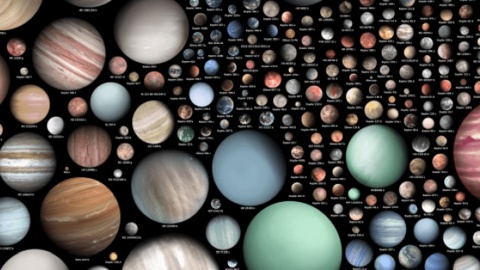
For most of human history, we weren't even sure if other stars had planets. Today, we know that the night sky is absolutely teeming with worlds. The discovery of exoplanets (planets outside our solar system) has fundamentally changed our place in the universe, turning science fiction into data-driven reality.


đź”­ The Game-Changers: Space Telescopes

While ground-based telescopes found the first few "Hot Jupiters" in the 1990s, it was the move to space that truly opened the floodgates. By escaping Earth's blurring atmosphere, telescopes could detect the tiniest dips in starlight.

  • The Kepler Space Telescope: Launched in 2009, Kepler was a powerhouse. It stared at a single patch of the sky for years, watching over 150,000 stars for "transits"—the moment a planet crosses in front of its star.
    • Impact: Kepler discovered over 2,700 confirmed planets and proved that planets are everywhere, not just rare anomalies.
  • TESS: The Transiting Exoplanet Survey Satellite took over the mantle in 2018, scanning the entire sky to find planets around the brightest, closest stars.
  • James Webb (JWST): While Kepler found them, Webb is studying them. It uses infrared light to analyze the atmospheres of these worlds, looking for water, methane, and carbon dioxide.

🧪 Worlds Like Nothing We’ve Seen

Our solar system has a neat layout: small rocky planets near the Sun and gas giants further out. But the galaxy is much weirder than we imagined. We’ve discovered types of planets that don't exist in our backyard:

  • Super-Earths: These are rockier and more massive than Earth but smaller than Neptune. They are the most common type of planet in the galaxy.
  • Mini-Neptunes: Scaled-down versions of Neptune with thick, gassy atmospheres.
  • Hot Jupiters: Massive gas giants that orbit their stars so closely that a "year" lasts only a few days.
  • Rogue Planets: Dark, lonely worlds that don't orbit any star at all, wandering through interstellar space.

📊 By the Numbers: How Many Are Out There?

Before Kepler, we didn't know if planetary systems were rare. Now, thanks to statistical analysis, astronomers have reached a mind-blowing conclusion:

"There are more planets than there are stars in the Milky Way."
  • The Estimate: With roughly 100 to 400 billion stars, current statistics suggest there are at least 1 trillion planets in the Milky Way alone.
  • Habitable Worlds: Estimates suggest that 1 in 5 Sun-like stars could have an Earth-sized planet orbiting in its "Habitable Zone."

What do you think? Does the idea of a trillion planets make the universe feel more crowded or more full of possibility?

🚀 Starship: The Second Space Revolution Is Coming
Starship

The first revolution in spaceflight was getting to orbit. The second, arguably even more transformative, will be routine, affordable access to space. And leading that charge is SpaceX's Starship, poised to redefine what's possible beyond Earth.


The Promise of Full Reusability: A Game Changer

For decades, rockets have been largely disposable, like throwing away an airplane after one flight. This is why space launch has been astronomically expensive. Falcon 9 proved that partial reusability works, dramatically lowering costs. Starship aims for full and rapid reusability of both its booster (Super Heavy) and the Starship upper stage.

"Imagine if flying an airplane cost the price of the plane itself, plus fuel, every single flight. That's essentially what spaceflight has been. Starship aims to change that to just the cost of fuel."

New Possibilities with Cheap Launch:

  • Mega-Constellations: Deploying thousands of satellites for global internet (Starlink), Earth observation, and navigation becomes far more economical.
  • Space-Based Manufacturing: Factories in orbit could produce advanced materials, pharmaceuticals, or even complex structures impossible to create with Earth's gravity.
  • Space Tourism & Hospitality: Imagine orbital hotels or even regular trips to the Moon becoming a reality for a wider population.
  • In-Orbit Servicing & Debris Removal: Cheaper access means it's feasible to repair satellites, refuel them, or even actively clean up space junk.
  • Science & Exploration: Launching larger, more capable telescopes, probes to the outer solar system, or even deep-space observatories will become significantly easier and less budget-constrained.

Not just small devices, but massive components for orbital infrastructure, space stations, and even lunar bases could be launched routinely.


Mars: The Ultimate Mission

While Starship has countless applications in Earth orbit and to the Moon, its overarching, stated goal is far more ambitious: making humanity a multi-planetary species by settling Mars.

Steps to a Martian Future:

  1. Cargo Missions: Initial Starship flights to Mars will be uncrewed, carrying tons of equipment, supplies, and habitat modules to prepare for human arrivals.
  2. Propellant Production on Mars: A key to sustainable Martian presence is producing rocket fuel (methane and oxygen) from Mars's atmosphere and subsurface water ice. Starship's design allows for this "in-situ resource utilization" (ISRU).
  3. Human Landings: Once infrastructure and life support are established, Starship will carry the first human explorers and settlers to the Red Planet.
  4. Building a Self-Sustaining City: Multiple Starship flights, carrying hundreds of people and vast amounts of cargo, are envisioned to build a permanent, self-sustaining city on Mars.

This vision isn't just about flags and footprints; it's about creating a new branch of human civilization, diversifying our species' survival, and pushing the boundaries of what we thought was possible.

What are you most excited about regarding Starship's potential?

🌕 Apollo 11: The Day the World Stood Still
Apollo 11

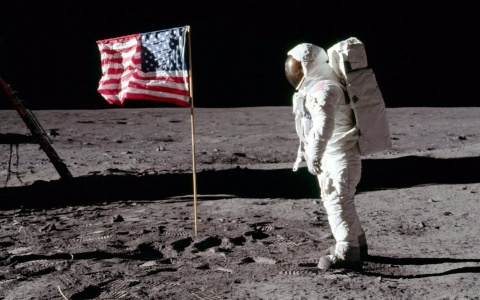
On July 20, 1969, an estimated 600 million people—one-fifth of the world's population at the time—watched a grainy black-and-white broadcast that would change history forever. The Apollo 11 mission wasn't just a technical feat; it was the fulfillment of a decade-long dream to reach another world.


🚀 The Mission That Made History

Launched atop the massive Saturn V rocket from Kennedy Space Center, Apollo 11 carried three pioneers into the unknown. While the mission's primary goal was simply to land and return safely, its impact was universal.

  • The Crew: Neil Armstrong (Commander), Buzz Aldrin (Lunar Module Pilot), and Michael Collins (Command Module Pilot).
  • The Descent: While Collins remained in orbit aboard Columbia, Armstrong and Aldrin descended in the Lunar Module, Eagle. The landing was harrowing, with computer alarms sounding and fuel running dangerously low as Armstrong manually steered past a boulder-filled crater.
  • The Touchdown: At 3:17 PM CDT, Armstrong's voice crackled across the void: "Houston, Tranquility Base here. The Eagle has landed."
"That's one small step for [a] man, one giant leap for mankind." — Neil Armstrong, stepping onto the lunar surface.

🔬 More Than Just Footprints

Armstrong and Aldrin spent roughly 2.5 hours on the lunar surface. During this time, they weren't just exploring; they were conducting vital science that still benefits us today:

  • Lunar Samples: They collected 47.5 pounds (21.5 kg) of Moon rocks and soil, which later proved that the Moon likely originated from a massive collision with early Earth.
  • Laser Retroreflector: This experiment allowed scientists on Earth to bounce lasers off the Moon to measure its exact distance. It is still operational today, revealing that the Moon is drifting away from Earth at about 1.5 inches per year.
  • Solar Wind Composition: They deployed a foil sheet to capture particles from the Sun, giving us our first direct look at the chemistry of the solar wind.

🚀 Beyond the First Step: The Later Missions

While Apollo 11 proved we could get there, the six subsequent missions that headed for the Moon (five of which landed) transformed the program from a Cold War race into a scientific powerhouse. Each mission pushed further into the lunar wilderness.

The Precision Landings and "Successful Failures"

  • Apollo 12 (Nov 1969): Demonstrated a precision landing by touching down within walking distance of the Surveyor 3 robotic probe. Pete Conrad and Alan Bean brought parts of the probe back to Earth to study how materials survive in space.
  • Apollo 13 (Apr 1970): Known as the "successful failure." An oxygen tank explosion forced the crew to abort the landing. The mission became a legendary survival story, using the Lunar Module as a lifeboat to swing around the Moon and return safely to Earth.

The Scientific Expeditions

  • Apollo 14 (Jan 1971): Alan Shepard (the first American in space) returned to flight, famously hitting golf balls on the lunar surface. This mission focused heavily on seismic experiments to understand the Moon's interior.
  • Apollo 15 (July 1971): The first "J-Mission," designed for long-duration stays. It featured the first Lunar Roving Vehicle (the Moon Buggy), allowing astronauts to explore kilometers away from their lander in the Apennine Mountains.
  • Apollo 16 (Apr 1972): Targeted the lunar highlands to sample older crustal rocks. Astronauts John Young and Charlie Duke drove the rover across rugged terrain to prove the Moon's history was volcanic.
  • Apollo 17 (Dec 1972): The grand finale. Harrison "Jack" Schmitt became the first professional geologist to walk on the Moon. The crew lived on the surface for three days, collecting the famous "orange soil" and setting records for the longest lunar stay.

🌎 The Legacy of Apollo

In total, 12 humans walked on the Moon. They left behind seismometers, laser reflectors, and flags, but they brought back 842 pounds (382 kg) of lunar material. This "treasure" continues to be analyzed today, providing clues about the early history of our entire Solar System.

The Apollo program pushed the boundaries of human ingenuity, leading to a "quantum jump" in technology. The integrated circuits developed for the Apollo Guidance Computer paved the way for the modern microchips in your phone and laptop today.

Beyond the hardware, Apollo gave us the "Earthrise" perspective—the realization that our planet is a fragile, beautiful marble floating in a vast, dark sea. It remains the only time humans have set foot on another celestial body.

The Apollo program remains a testament to what we can achieve when we aim for the stars. As we prepare for the Artemis missions to return to the Moon, we stand on the shoulders of the 400,000 people who made the Apollo era possible.

Did you know? Because there is no wind on the Moon, the footprints left by Armstrong and Aldrin are likely still there today, perfectly preserved.

đź”´ Viking 1 & 2: Our First True Look at Mars
Viking

Before the twin Viking landers touched down in 1976, our view of Mars was largely speculative, based on telescopic observations and flyby missions. But with Viking 1's historic landing on July 20, 1976 (the seventh anniversary of Apollo 11!), humanity finally got its first prolonged, up-close look at the Martian surface. It was a moment that redefined our understanding of the Red Planet.


Landing on an Alien World: The Initial View

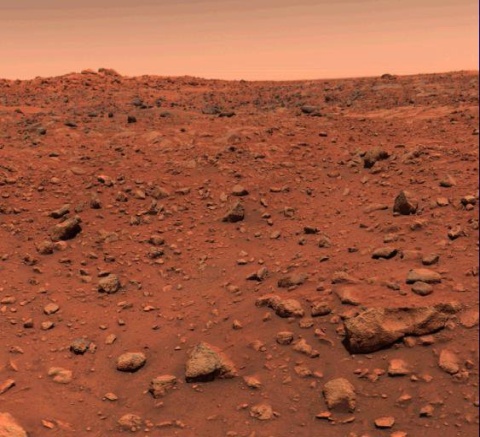
The images beamed back from Viking 1 were instantly iconic. They revealed a desolate yet strangely beautiful landscape that looked like nothing on Earth.

The ground was indeed red, a rusty hue from oxidized iron—the same process that makes rust red on Earth. But perhaps more striking was the sky: not blue like Earth's, but a pale pink or salmon color, caused by the scattering of sunlight by fine dust particles suspended in the thin atmosphere.

The landscape was littered with rocks, some rounded and pitted by erosion, others sharp and angular. Dunes were visible in the distance, hinting at wind-driven processes. It was an alien world, yet familiar enough to ignite our imagination about potential past life.


A Legacy of Exploration and Scientific Firsts

The Viking program consisted of two orbiters and two landers, each a marvel of 1970s engineering. The landers weren't just cameras; they were fully equipped robotic laboratories.

Key Discoveries and Experiments:

  • Atmospheric Analysis: Viking provided the first detailed measurements of Mars's atmospheric composition, confirming it was primarily carbon dioxide.
  • Weather Station: The landers continuously monitored Martian weather, recording temperature, pressure, and wind speed, revealing seasonal cycles.
  • Search for Life: Perhaps the most anticipated experiments were the biology packages, designed to detect signs of microbial life in the Martian soil. While one experiment yielded initially tantalizing results, the consensus today is that the Viking landers did not find definitive evidence of extant life.
  • Long-Lived Operations: Both landers far exceeded their planned 90-day missions. Viking 1 operated for over six years, and Viking 2 for over three years, providing a treasure trove of data.
"The Viking missions were foundational. They set the stage for every Mars mission that followed, from the Pathfinder rover to Curiosity and Perseverance, teaching us how to land and operate on another planet."

The Enduring Impact

The Viking missions cemented Mars as a prime target for future exploration. They taught us invaluable lessons about planetary entry, descent, and landing, and the challenges of searching for life beyond Earth. Every rover and lander that has graced the Martian surface since owes a debt to the pioneering spirit of Viking 1 and Viking 2.

What aspect of the Viking missions do you find most fascinating? The hunt for life, or those stunning first images of a pink sky?